


SaaS businesses are moving beyond traditional fixed monthly subscriptions as customers increasingly expect pricing that reflects actual usage. A pay-per-use billing model allows companies to charge customers according to the resources, transactions, API calls, storage, processing time, or other measurable services they consume. This approach can make software more accessible to smaller customers while allowing growing businesses to increase revenue as usage expands.
For SaaS companies, the challenge is not simply deciding how much to charge. The billing system must accurately measure consumption, calculate charges, manage customer payment methods, generate invoices, and provide a clear view of usage. Stripe can support many of these requirements through its billing and payment infrastructure, giving product teams a foundation for developing flexible usage-based experiences.
A well-designed usage-based model should be easy for customers to understand and predictable enough for businesses to forecast revenue. When pricing, metering, billing, and product analytics work together, pay-per-use billing can become an important part of a modern SaaS growth strategy.
What Is a Pay-Per-Use Billing Model?
Pay-per-use billing is a pricing structure where customers pay based on how much of a service they actually consume. Instead of charging every customer the same recurring amount, a SaaS company establishes measurable usage units and assigns a price to each unit.
For example, an artificial intelligence platform might charge according to the number of processed requests. A cloud-based design application could charge for rendered files, while an analytics platform might calculate pricing according to data volume or tracked events.
Common usage metrics include:
- API requests
- Data processed
- Storage consumed
- Messages sent
- Documents generated
- Minutes processed
- Active users
- Computing resources used
- Transactions completed
This model can be particularly effective when customer usage varies significantly. A small startup may only consume a fraction of the resources used by an enterprise customer, so usage-based pricing allows each customer to pay more closely according to their actual needs.
Why Usage-Based Pricing Is Growing in SaaS
Traditional subscriptions remain useful, but they can create friction when customers have unpredictable or rapidly changing usage. A business may hesitate to purchase an expensive plan when it is uncertain how much software it will consume.
Pay-per-use pricing addresses this concern by lowering the initial commitment. Customers can start with limited usage and increase spending as the value they receive from the product grows.
For SaaS companies, this approach can create several advantages:
- Lower barriers to initial adoption
- Better alignment between price and customer value
- Natural revenue expansion as usage increases
- Flexible options for different customer segments
- Greater transparency around resource consumption
The model also works well with modern product-led growth strategies. Users can experiment with a product without immediately committing to a large annual contract. As usage becomes an essential part of their workflow, spending can naturally increase.
However, successful implementation requires more than simply attaching a price to a usage metric. The entire billing architecture must be carefully designed.
How Stripe Supports Usage-Based SaaS Billing
stripe can serve as a core component of a usage-based billing architecture by helping SaaS companies manage recurring billing, customer subscriptions, invoices, payment collection, and pricing structures. The important principle is to separate product usage measurement from payment processing.
A SaaS application should first determine what the customer consumed. That information can then be converted into billable quantities and incorporated into the customer’s billing cycle.
A simplified workflow looks like this:
Customer activity → Usage measurement → Usage validation → Pricing calculation → Invoice generation → Payment collection
For example, suppose a document-processing platform charges $0.04 for every document processed. During a billing period, one customer processes 2,500 documents. The system records the activity, validates the quantity, applies the appropriate pricing rule, and calculates a usage charge of $100.
This separation allows engineering teams to maintain control over product analytics while using stripe for the financial side of the customer relationship.
Designing the Right Usage Metric
Choosing the right usage metric is one of the most important decisions in a pay-per-use strategy. The metric should represent something customers understand and associate with the value they receive.
A poor metric can make pricing confusing. For instance, charging customers according to an internal database operation may accurately reflect infrastructure costs but may not communicate product value.
A stronger approach is to select a metric that connects consumption with an obvious customer outcome.
Consider these examples:
| SaaS Product | Possible Usage Metric | Example Pricing Approach |
|---|---|---|
| AI platform | Requests processed | Price per request |
| Video service | Processing minutes | Price per minute |
| Email platform | Messages delivered | Price per message |
| Data platform | Records processed | Price per record |
| Document service | Files generated | Price per document |
| Storage platform | Data stored | Price per GB |
The best metric should be measurable, auditable, relatively stable, and difficult to misunderstand. Businesses should also consider whether customers can predict their consumption before receiving an invoice.
Creating a Reliable Usage Metering System
Accurate metering is the foundation of usage-based billing. If usage data is incomplete or duplicated, customers can receive incorrect charges and lose confidence in the product.
A robust metering architecture should capture relevant events whenever billable activity occurs. Each event should ideally contain information such as the customer identifier, usage type, quantity, timestamp, and unique event identifier.
The system should also account for duplicate events, delayed events, failed operations, refunds, and corrections. Idempotency is especially important because the same event may accidentally be submitted more than once during retries or network failures.
SaaS teams should establish clear rules for:
- What counts as billable usage
- When usage becomes billable
- How failed operations are treated
- How duplicate events are handled
- Whether usage can be corrected
- How usage is displayed to customers
- When usage becomes part of an invoice
Building these rules before launching the pricing model can prevent significant billing disputes later.
Combining Fixed Fees with Usage Charges
Pure pay-per-use pricing is not the only option. Many modern SaaS products combine a recurring base fee with variable consumption charges.
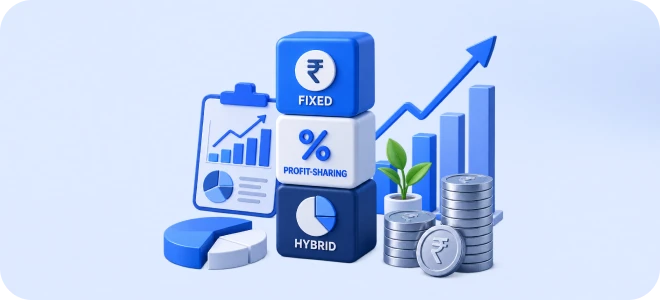
For example, a platform could charge customers a $29 monthly platform fee plus $0.02 for every processed transaction. This hybrid structure creates a predictable minimum revenue level while still allowing customers to pay according to usage.
Another approach is to include a certain amount of usage in the subscription:
- $49 per month includes 5,000 events
- Additional events cost $0.01 each
- Higher-volume customers receive lower per-unit rates
This model can make pricing easier to understand because customers know they have a defined allowance before additional charges apply.
Tiered usage pricing can also reward customers for growing their consumption. For instance, the first 10,000 units might cost $0.02 each, while the next 40,000 units cost $0.015 each.
Using Stripe to Automate the Billing Process
stripe can help businesses connect their pricing strategy with recurring billing and payment workflows. Once validated usage has been associated with the correct customer and billing period, the resulting charges can be incorporated into the appropriate billing process.
Automation is particularly valuable when a SaaS company has hundreds or thousands of customers. Manually calculating usage would quickly become inefficient and introduce opportunities for human error.
A typical automated system can handle:
- Customer account identification
- Usage event collection
- Event validation
- Usage aggregation
- Pricing calculation
- Invoice preparation
- Payment collection
- Receipt or billing notification
- Internal revenue reporting
The application should retain enough information to explain how every charge was calculated. Transparency becomes especially important when invoices vary from month to month.
Building Customer-Friendly Usage Visibility
One common problem with usage-based pricing is the surprise invoice. Customers may accept variable pricing but become frustrated if they cannot see how quickly their usage is increasing.
A strong SaaS product should therefore provide a usage dashboard. Customers should be able to understand their current consumption, estimated spending, historical usage, and applicable pricing rules.
Useful dashboard elements can include:
- Current billing-period usage
- Usage remaining in an included allowance
- Estimated current charges
- Historical consumption
- Usage by feature
- Pricing tier
- Billing-period dates
- Spending alerts
This information turns billing from a back-office function into a visible part of the product experience.
Adding Spending Controls and Usage Alerts
Usage-based systems can create unexpected expenses if an automated process suddenly generates millions of requests. Businesses should therefore provide safeguards that help customers control spending.
Possible controls include monthly spending limits, usage thresholds, email notifications, account-level quotas, and administrator alerts.
For example, a customer could receive notifications when consumption reaches 50%, 75%, and 90% of a selected threshold. An enterprise administrator could also configure a hard limit that prevents additional usage after a predetermined amount.
These controls are especially important for API-based products, automation platforms, and AI services where a software error can generate substantial activity in a short period.
The goal is not to restrict customers unnecessarily. Instead, these controls should create confidence that usage-based pricing is manageable and transparent.
Handling Pricing Changes as the SaaS Product Grows
A pricing model that works for 100 customers may become difficult to manage at 10,000 customers. SaaS businesses should therefore design billing architecture with future pricing changes in mind.
New pricing tiers, discounts, regional prices, enterprise agreements, promotional credits, and minimum commitments may eventually become necessary.
stripe can be incorporated into an architecture where product teams maintain clear pricing rules while billing infrastructure handles customer payment relationships. This separation makes it easier to evolve pricing without rebuilding the entire application.
Businesses should also maintain versioned pricing logic. If a customer was billed under one pricing structure during a previous period, the company should be able to determine exactly which rules were used.
Security and Reliability Considerations
Billing data deserves the same engineering attention as other critical SaaS infrastructure. Incorrect charges can damage customer relationships, while unreliable payment processes can directly affect revenue.
Companies should protect billing-related systems with strong access controls, event validation, monitoring, logging, and automated testing.
Important engineering practices include:
- Encrypting sensitive information
- Restricting billing administration access
- Monitoring unusual usage patterns
- Maintaining detailed audit logs
- Testing pricing calculations
- Preventing duplicate usage events
- Establishing recovery procedures
- Separating production and testing environments
Payment information should also be handled through appropriate payment infrastructure rather than being unnecessarily stored inside the SaaS application’s own database.
Optimizing Pay-Per-Use Pricing for Customer Value
A usage-based system should not simply maximize the number of billable events. Pricing should encourage customers to achieve meaningful outcomes.
Businesses can evaluate whether customers understand the pricing, whether usage increases after adoption, and whether invoices correspond to perceived value.
Useful metrics include:
- Average revenue per customer
- Usage growth
- Conversion from free to paid usage
- Expansion revenue
- Customer retention
- Invoice disputes
- Average cost per usage unit
- Revenue generated by each pricing tier
These measurements can reveal whether the pricing model is helping or hurting product growth.
stripe can provide the payment and billing foundation, but the SaaS company remains responsible for creating a pricing experience that feels logical and valuable to its customers.
Common Mistakes to Avoid
Usage-based billing can fail when companies focus exclusively on technical implementation and overlook the customer experience.
Several mistakes deserve particular attention:
- Using a complicated or unclear usage metric
- Providing insufficient usage visibility
- Failing to handle duplicate events
- Creating unpredictable invoices
- Ignoring failed transactions
- Changing pricing without clear communication
- Offering no spending controls
- Mixing billing logic throughout the application
Another mistake is launching with too many pricing dimensions. Charging according to users, storage, API calls, features, transactions, and support levels simultaneously can make invoices extremely difficult to understand.
A simpler model is often easier to sell, implement, support, and optimize.
A Practical Roadmap for SaaS Teams
Companies planning to introduce pay-per-use billing can approach the project in stages.
Stage 1: Define the value metric
Identify the unit that best represents customer value.
Stage 2: Build usage tracking
Create reliable event collection and aggregation.
Stage 3: Establish pricing rules
Define unit costs, allowances, tiers, minimums, and discounts.
Stage 4: Connect billing infrastructure
Integrate validated usage with the payment and invoicing workflow.
Stage 5: Create usage visibility
Give customers access to consumption and estimated billing information.
Stage 6: Add safeguards
Introduce alerts, quotas, and spending controls.
Stage 7: Test unusual scenarios
Simulate duplicate events, failed payments, corrections, refunds, and high-volume usage.
Stage 8: Measure performance
Monitor customer adoption, revenue expansion, support requests, and billing accuracy.
This staged approach allows teams to validate the commercial model before investing heavily in advanced billing features.
The Future of Usage-Based SaaS Billing
As SaaS products become increasingly API-driven, automated, and resource-intensive, usage-based pricing is likely to remain an important part of software monetization. AI services, data platforms, developer tools, automation products, and infrastructure software are particularly well suited to consumption-based models.
The next generation of billing systems will increasingly connect product activity, real-time usage analytics, customer controls, and payment infrastructure. Customers will expect to understand not only what they are paying, but also why their usage increased and what they can do to control spending.
For SaaS businesses, this creates an opportunity to design pricing as an extension of the product rather than treating billing as an administrative task. A thoughtful usage model can make it easier for customers to start small, scale naturally, and pay in proportion to the value they receive.
Conclusion
Pay-per-use billing can give modern SaaS companies a flexible way to align revenue with customer consumption. The strongest models combine simple pricing metrics, dependable usage measurement, transparent invoices, customer-friendly dashboards, and sensible spending controls. stripe can provide an important foundation for managing payment and billing operations, but successful implementation depends on the broader architecture surrounding it. Product teams must carefully define what counts as usage, engineering teams must ensure accurate metering, and businesses must make pricing understandable to customers.
When these elements work together, usage-based billing becomes more than a payment mechanism. It becomes a scalable commercial strategy that allows customers to begin with what they need and grow naturally as their reliance on the product increases. For modern SaaS companies seeking flexible monetization, a carefully engineered pay-per-use model can create a stronger connection between customer value, product consumption, and long-term revenue growth.