


Digital customer onboarding has become a critical part of how businesses build relationships with new users. Whether a company operates a financial platform, marketplace, subscription service, professional network, or online commerce platform, verifying who customers are can reduce fraud while creating a safer environment. Traditional identity checks often require manual document reviews, lengthy forms, and repeated interactions, which can frustrate legitimate customers.
Modern identity verification combines automated document analysis, biometric matching, data validation, and risk-based checks to make onboarding more efficient. Stripe offers identity verification capabilities designed to help businesses confirm customer identities through digital workflows. Instead of relying entirely on manual review, companies can use technology to collect relevant information and evaluate identity signals during onboarding.
The goal is not simply to add another security step. Effective identity verification should balance protection, convenience, accuracy, privacy, and conversion. When these elements work together, businesses can create onboarding experiences that discourage fraudulent activity without unnecessarily creating obstacles for genuine customers.
Why Identity Verification Matters During Digital Onboarding
Digital businesses rarely have the opportunity to meet customers face to face. A user can create an account from another city or country within minutes, making it difficult to establish whether the individual is genuine. This creates opportunities for identity theft, fake accounts, impersonation, account abuse, and other forms of digital fraud.
Identity verification introduces an additional layer of confidence before customers receive access to sensitive services or valuable features. Depending on the business model, verification may be required when opening an account, making a high-value transaction, accessing financial services, joining a marketplace, or performing another activity that carries elevated risk.
A well-designed verification process can help businesses:
- Confirm that customers are real individuals.
- Detect potentially fraudulent identity documents.
- Reduce impersonation attempts.
- Support compliance-oriented onboarding processes.
- Protect valuable accounts and services.
- Establish greater confidence between customers and platforms.
- Reduce dependence on entirely manual identity checks.
The most effective approach is usually risk-based rather than identical for every customer. A low-risk user might require a lightweight verification step, while a higher-risk account may need stronger evidence before receiving access to certain features.
Understanding the Main Identity Verification Methods
Identity verification does not depend on one single technique. Different methods examine different aspects of a customer’s identity, and businesses can combine them according to their risk requirements.
Government ID Document Verification
Government-issued identification is one of the most recognizable forms of digital identity verification. Customers may be asked to capture an eligible passport, identity card, or driver’s license using their device camera.
The verification process can examine information such as the document’s visual characteristics, expiration status, machine-readable elements, and consistency between different portions of the document. Automated analysis can help identify suspicious documents without requiring employees to manually inspect every submission.
For businesses, this method can be particularly useful when stronger identity evidence is needed during account creation. However, the customer experience matters. Instructions should clearly explain how to position the document, avoid glare, and capture readable images.
Selfie and Biometric Matching
A legitimate identity document does not necessarily prove that the person presenting it is the rightful owner. Someone could potentially obtain another person’s document and attempt to use it during onboarding.
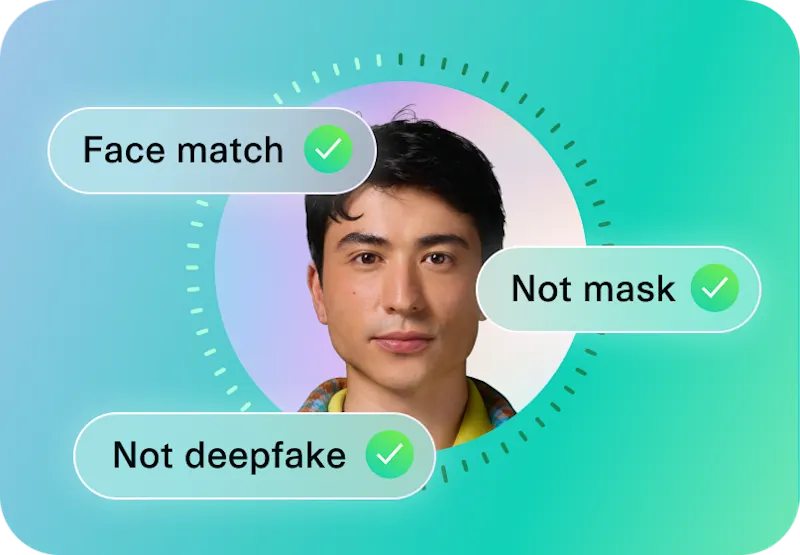
Selfie verification addresses this additional risk by comparing a customer’s facial image with the photograph associated with the submitted identity document. Stripe can use biometric matching technology as part of an identity verification flow to determine whether the face presented corresponds with the person represented by the document.
This approach adds another layer of protection because the system evaluates both the document and the individual presenting it. It can be especially valuable for platforms where account ownership and user identity need to be closely connected.
ID Number Verification
Some verification workflows rely on information such as a customer’s name, date of birth, and government-issued identification number. These details can be checked against appropriate databases where the service and jurisdiction support that method.
ID number verification can reduce the need for customers to submit extensive physical documentation in certain scenarios. It may also work as an additional signal alongside document verification.
Businesses should consider geographical availability, regulatory requirements, and the sensitivity of collected information before selecting this approach. The goal should always be to collect only information that is genuinely necessary for the intended verification purpose.
Phone Number Verification
Phone verification provides a relatively lightweight method of confirming that a customer has access to a particular phone number. A one-time code can be sent through SMS, requiring the user to enter the code during onboarding.
Although phone verification is not equivalent to government ID verification, it can provide a useful additional signal. It works particularly well when combined with other risk indicators.
For example, a platform could use phone verification during ordinary registration and introduce stronger identity checks when a customer attempts to access higher-risk functionality.
Address Verification
Address information can provide another layer of identity confidence. Depending on the available verification workflow and jurisdiction, customers may be asked to provide information or documentation associated with their residential address.
Address verification can be useful for businesses that need to establish a customer’s location or meet particular operational requirements. However, businesses should avoid requesting address evidence simply because it is available. Every additional requirement introduces friction, so the information should have a clear purpose.
How Different Verification Methods Work Together
The greatest strength of modern identity verification is the ability to combine several signals instead of depending on one piece of information.
Consider a fictional online investment platform. During registration, a customer might provide basic personal information and a phone number. If the customer requests access to advanced financial features, the platform could then request a government-issued ID and matching selfie.

This layered approach allows the business to adjust verification requirements according to risk. Customers who present fewer warning signals may experience a simpler onboarding process, while accounts requiring additional confidence can receive deeper verification.
Stripe supports different verification checks that businesses can configure according to their onboarding requirements. This flexibility can help companies design workflows that are more closely aligned with their products rather than forcing every customer through the same process.
| Verification Method | Primary Purpose | Typical Strength | Best Used For |
|---|---|---|---|
| Government ID | Confirm document authenticity | High | Higher-risk onboarding |
| Selfie Match | Connect user with ID photo | High | Impersonation prevention |
| ID Number | Validate identity information | Medium to High | Supported jurisdictions |
| Phone Verification | Confirm phone access | Medium | Low-friction registration |
| Address Verification | Confirm residential information | Medium | Location-sensitive services |
Designing a Safer Yet Smoother Onboarding Journey
Security alone does not guarantee a successful onboarding process. If verification is confusing or unnecessarily long, legitimate customers may abandon registration.
Businesses should therefore focus on reducing avoidable friction. Customers should understand what they need to provide before beginning verification. Instructions should be short, clear, and written in everyday language.
A strong onboarding experience can include:
- A clear explanation of why verification is required.
- Simple instructions for photographing documents.
- Mobile-friendly verification screens.
- Immediate feedback when an image is unclear.
- Helpful recovery options after a failed attempt.
- Transparent information about how identity data is handled.
- Additional verification only when justified by risk.
Camera guidance is especially important. Poor lighting, reflections, cropped documents, and blurry images can cause legitimate verification attempts to fail. Giving users immediate instructions can reduce unnecessary retries and improve the overall experience.
Using Live Capture to Strengthen Verification
One important security consideration is distinguishing genuine camera captures from manipulated or previously prepared images. Live capture can help businesses create a more controlled verification process by requiring customers to photograph their documents during the verification session.
This can make certain forms of presentation fraud more difficult. However, security controls should be balanced against accessibility. Some customers may use older devices, have limited camera capabilities, or experience environmental conditions that make document capture difficult.
A thoughtful implementation should therefore provide clear guidance without assuming every customer has the latest smartphone.
Privacy Should Be Part of the Customer Experience
Identity verification involves sensitive information, so privacy cannot be treated as an afterthought. Customers are more likely to trust a verification process when they understand what information is being collected and why.
Businesses should communicate the purpose of verification in straightforward language. They should also establish appropriate internal controls around access, retention, processing, and deletion of sensitive information.
Important privacy considerations include:
- Collect only necessary identity information.
- Restrict access to sensitive verification data.
- Clearly communicate the reason for collection.
- Follow applicable privacy and data-protection obligations.
- Establish appropriate retention and deletion practices.
- Monitor how verification information moves between systems.
Stripe provides identity verification infrastructure that can be integrated into broader digital business workflows, but companies remain responsible for designing onboarding experiences that appropriately address their own legal, operational, and privacy obligations.
Matching Verification Strength to Business Risk
Not every customer interaction deserves the same verification intensity. A company offering a simple newsletter subscription may have little reason to request government identification. A platform providing access to financial services may have much stronger identity requirements.
This makes risk-based onboarding an important strategy.
Businesses can evaluate factors such as:
- Transaction value.
- Account privileges.
- Geographic risk.
- Unusual login behavior.
- Repeated verification attempts.
- Device or session signals.
- Changes to sensitive account information.
- Suspicious activity patterns.
Instead of making every customer complete the most demanding verification process, businesses can increase verification requirements when risk increases.
This approach can improve both security and conversion because legitimate low-risk customers avoid unnecessary barriers while higher-risk situations receive greater scrutiny.
Common Challenges With Digital Identity Verification
Even well-designed verification systems can encounter problems. A customer might submit an expired document, photograph the wrong side of an ID, provide an image with excessive glare, or use information that does not match their account details.
Technical problems can also affect the experience. Poor network connectivity, unsupported devices, camera permissions, and browser issues may interrupt the process.
Businesses should therefore build recovery paths rather than treating every failed verification as a permanent rejection.
Useful recovery strategies include:
- Explaining why verification failed.
- Allowing customers to retry when appropriate.
- Providing clear image-capture instructions.
- Offering alternative supported documents.
- Routing exceptional cases for appropriate review.
- Avoiding repetitive requests for information already collected.
The objective is to distinguish genuine verification failures from temporary technical or user-experience problems.
Measuring the Performance of an Identity Verification Process
Identity verification should be measured like any other important part of the customer journey. A business should understand whether its process actually improves security without damaging customer conversion.
Useful performance indicators include verification completion rate, abandonment rate, retry frequency, average verification time, manual review volume, and suspicious-account detection.
For example, a business might discover that most failed attempts are caused by poor document images rather than fraudulent activity. That insight could lead to better camera instructions instead of adding more security requirements.
Similarly, if customers frequently abandon the process before uploading an ID, the company may need to explain the purpose of verification earlier in the onboarding journey.
Continuous measurement allows businesses to improve both security and usability rather than treating verification as a one-time technical implementation.
Building Trust Through Transparent Onboarding
Customers are more comfortable sharing sensitive information when businesses explain the reason behind the request. A vague message such as “Verify your identity” provides little context. A clearer explanation can tell customers that verification helps protect their account or unlock specific services.
Trust also depends on consistency. The verification experience should match the overall design language of the platform. Customers should know when they are entering a verification stage and what will happen next.
Businesses can strengthen confidence by explaining:
- Why verification is required.
- What information will be requested.
- How long the process should take.
- What happens if verification fails.
- How customers can get assistance.
- What choices they have regarding their information.
A transparent process makes security feel like part of customer protection rather than an unexplained obstacle.
The Role of Automation in Modern Verification
Automation can dramatically reduce the workload associated with identity checks. Instead of having employees manually inspect every document, automated systems can evaluate many common verification signals and identify cases that require additional attention.
This creates an important division of responsibilities. Automation can handle routine checks quickly, while human review can remain available for unusual or ambiguous situations.
Stripe uses automated technology and verification workflows designed to evaluate identity information and detect potential fraud signals. For businesses, the broader lesson is that automation works best when it complements sensible risk policies rather than replacing thoughtful onboarding design.
Preparing for the Future of Digital Identity
Digital identity verification will continue evolving as businesses move more services online. Customers increasingly expect fast registration, mobile-friendly experiences, and immediate access to digital services. At the same time, fraud techniques are becoming more sophisticated.
Future-ready businesses will need to balance these competing expectations. Stronger verification does not necessarily mean longer onboarding. Instead, better technology can help businesses use multiple signals intelligently while asking customers for additional evidence only when necessary.
The most effective identity strategy will likely combine document verification, biometric signals, account intelligence, behavioral indicators, and risk-based decision-making. Businesses should also regularly review their verification processes as threats, customer expectations, and regulatory requirements change.
Conclusion
Identity verification has become an important component of secure digital customer onboarding. Government ID checks, selfie matching, ID number validation, phone verification, and address checks each provide different levels of identity confidence. When combined thoughtfully, these methods can help businesses reduce impersonation, discourage fraudulent accounts, and establish stronger customer trust. The best onboarding process is not necessarily the one with the most verification steps. It is the one that applies the right level of verification to the right situation while keeping legitimate customers moving forward.